Lost Vape Centaurus: how the range works
A dual cell mod advertised at 200 watts reads impressively on a listing, but the specification says almost nothing about what happens between the button press and the first inhale. On a Lost Vape Centaurus, that journey runs through a circuit board, a regulation stage and a heated coil.
Understanding the chain changes how you set the device. It also explains why two mods quoted at the same wattage behave nothing alike in the hand.
Lost Vape Centaurus: what defines the range
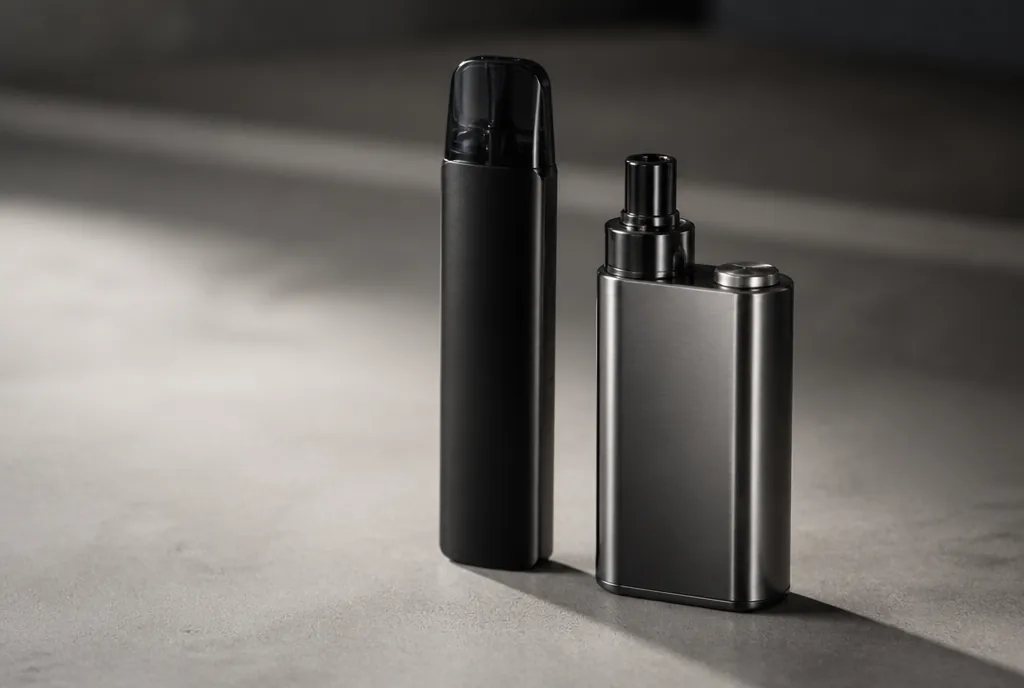
The Lost Vape Centaurus line brings together regulated electronic modules capable of holding a chosen output steady regardless of how charged the cells are. The M200 and the newer N200 run on two removable 18650 cells and climb to 200 watts, the M100 makes do with one, and formats such as the PM 100 carry a built-in battery instead.
The common thread is not the format but the logic. A board continuously measures the resistance attached and adjusts the voltage to reach the wattage requested, and that regulation is precisely what separates these devices from an unregulated mechanical mod.
British listings now cover several generations at once, which is why the same name appears on a metal chassis in one shop and a polycarbonate one in another. The chip family, not the shell, is the useful thing to compare.
The path the energy takes, link by link
The chain breaks into four successive stages. Each imposes its own limit, and the weakest link is what determines the behaviour of the whole device.
The source comes first. On a Centaurus M200, two 18650 cells sit behind a magnetic side panel and deliver a raw voltage that falls as the day goes on. That variation is exactly what the board exists to compensate for, and without it the vape would fade steadily.
The chipset comes second. The M200 uses a Quest 2.0 board whose role reduces to three operations: read the resistance fitted, calculate the voltage needed for the wattage displayed, then chop the current to deliver it without overshooting.
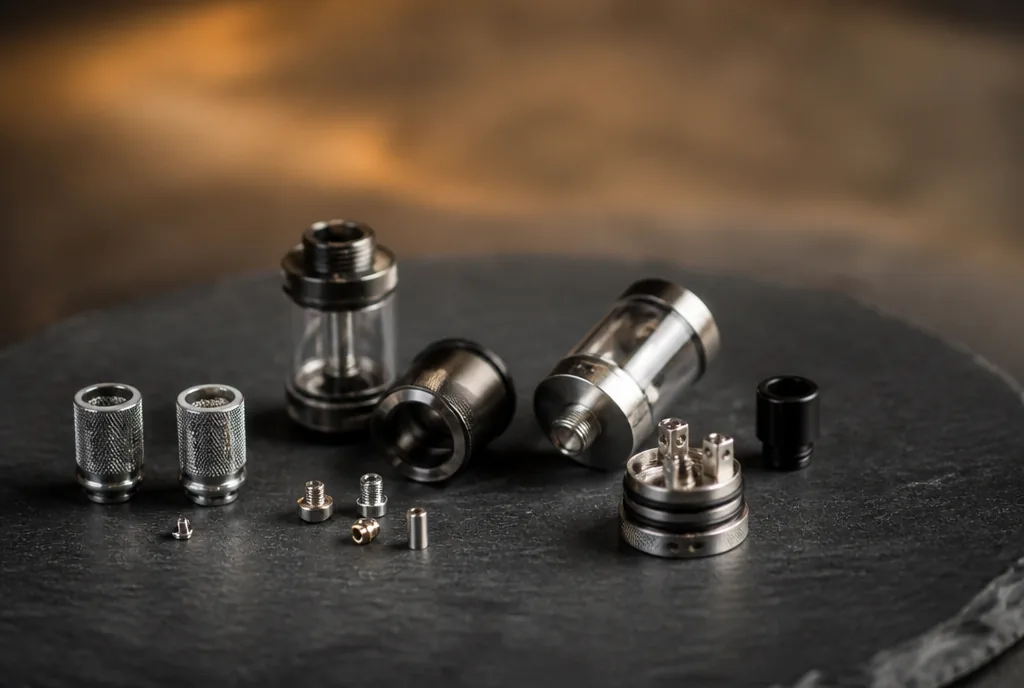
The coil and wick come third. Current passes through a metal strip or wire wound around an absorbent material, usually cotton, which is saturated with e-liquid by capillary action and brought up to temperature by resistive heating. Nothing burns as long as liquid arrives at the same rate the coil heats.
The tank is the passive fourth link. Air enters through adjustable inlets, crosses the chamber and carries the vapour to the mouthpiece. The M200 plate accepts atomisers up to 26 mm without overhang on a standard 510 connection.
Reading a cell before trusting the headline wattage
The mod’s ceiling belongs to the board. What the device can actually sustain depends on the cells you own, and those cells come with published documentation that is worth learning to read.
Any reputable 18650 has a datasheet from its manufacturer. Three lines carry the weight: the rated capacity, which sets runtime, the continuous discharge current, which is what the maker has tested the cell to supply within its specified window, and the upper and lower voltage limits that define where the chemistry is meant to operate.
The method matters more than any single number. Trace the datasheet back to the cell manufacturer rather than relying on a figure printed on a rewrap or quoted in a marketplace listing, because those two sources routinely disagree. A cell whose documentation you cannot find gives you no basis for judgement at all.
The Lost Vape Centaurus models and what separates them
Choosing within the Centaurus family is mostly a choice of power architecture, since the electronics stay broadly similar from one model to the next.
The removable cell mods form the core. The M200, the N200 and the BT200 all run two 18650s and reach 200 watts, while the M100 and M100 V2 take a single cell, which cuts runtime and available output but lightens the device considerably. The BT200 adds Bluetooth connectivity and a larger colour screen, which is the main point of difference in that group.
The structural advantage of a removable cell is simple. A tired pair gets replaced, whereas a worn built-in battery ends the useful life of the whole device.
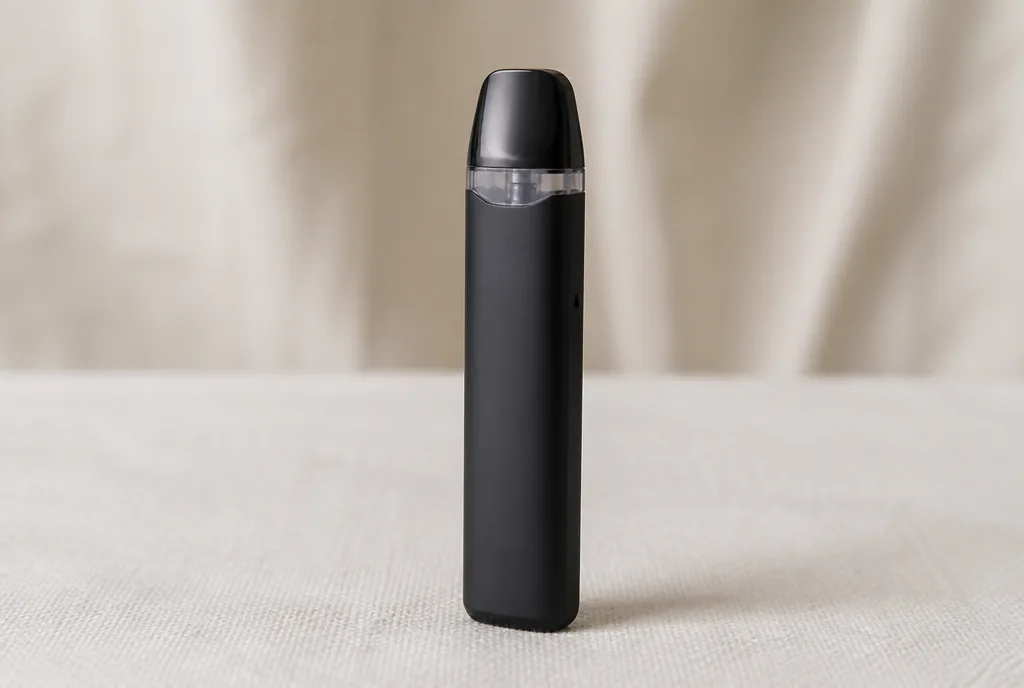
The integrated battery formats sit at the other end. The Centaurus PM 100 pairs a large internal cell with a 100 watt ceiling, and the Ori 35 drops to a pod format aimed at a tighter draw. Both target simplicity and portability rather than raw output, and both are supplied in the United Kingdom with pods capped at the 2 ml legal limit.
The Thelema Solo Centaurus V2 occupies the middle ground by accepting either an 18650 or a 21700 cell, which lets you trade bulk against runtime.
What the screen is actually telling you
The OLED display on the M200 does more than show a wattage figure. It reports charge percentage cell by cell, the duration of the current puff, a puff counter, and above all the resistance value measured at that instant.
That last figure is the most useful thing on the screen day to day. A value that drifts noticeably from one day to the next signals a dirty contact or a coil approaching the end of its life, well before the flavour degrades enough to notice.
The adjustment dial is ringed by an LED whose colour encodes remaining runtime, from red at the low end to violet near a full charge. It is rarely mentioned in product listings, yet it lets you read the state of charge without waking the screen at all.
Regulated against mechanical: what the board really changes
The comparison explains the chipset better than any specification sheet. Two devices can carry identical cells and behave in completely opposite ways.
On a mechanical mod nothing sits in between. Cell voltage arrives at the coil as it is, so the delivered power depends entirely on state of charge and on the value fitted, and it decreases continuously through the day.
A regulated module such as a Centaurus instead holds the displayed setting until the cells no longer have the reserve to sustain it. The vape stays identical from first puff to last, then the device announces the end of runtime rather than fading away.
That comfort has a measurable cost. Voltage conversion consumes a share of the stored energy, so an unregulated setup on equivalent cells will always yield slightly more puffs, at the price of zero consistency and a complete absence of protections.
The protections, the invisible part of the circuit
A regulated module carries a set of automatic cutoffs. On the Centaurus M200 the list covers a cutoff beyond ten seconds of continuous firing, overheat protection, detection of a missing or out of range atomiser, short circuit protection and a low voltage cutoff.
Those safeguards explain why a regulated device sometimes refuses to fire for no apparent reason. The message on screen names the cause, and reading it saves a good deal of unnecessary hardware replacement.
The same reasoning applies to consumables, as our guide to Geekvape coil series demonstrates on the other major coil family sold in Britain.
Setting one up without getting it wrong
Understanding the circuit does not yet tell you what to do out of the box. Four steps structure the first use of a Centaurus, and the order matters.
Insert the cells respecting the polarity moulded into the bay, then power on with five rapid presses of the fire button. The device displays the resistance it measures before you touch a single setting, which is the first thing worth reading.
Prime the new coil next. Wet the cotton visible through the side ports, fill the tank, and wait ten minutes or so. This step determines the working life of the part far more than any later adjustment does.
Finally, set the wattage at the bottom of the range printed on the coil itself rather than in the middle, and climb in small steps, leaving several puffs between each one so the wick can keep up.
Frequently asked questions
Do the two cells in a dual battery mod need to match?
Yes. Convention is that both cells are the same model, the same age and charged to the same level. An imbalance makes the circuit work asymmetrically and shortens the life of the weaker of the pair.
What does an unstable resistance reading mean?
A value that jumps between readings almost always reflects an imperfect contact between the 510 plate and the atomiser. Cleaning the connection and rescrewing without forcing resolves the majority of cases.
Can the USB-C port charge the cells inside the mod?
On removable cell models, internal charging exists but is best treated as a stopgap. A dedicated external charger handles each cell individually and remains preferable for regular use.
Why is the maximum wattage never reachable in practice?
The headline figure assumes a very low resistance and cells documented to supply a high current. With a coil of ordinary value, the board reaches its voltage limit long before it approaches that number.
Does a Centaurus accept a rebuildable atomiser?
Yes. The 510 connection and the 26 mm plate allow it, and the extended display intended for that kind of build makes it easier to check the value obtained after wiring.
Reading a Lost Vape Centaurus before you set it
A regulated mod is neither a plain battery nor a black box. It is a converter that obeys whatever resistance you present to it, and on a Lost Vape Centaurus the screen gives you everything you need to know what the device is doing, provided you know what to look for.
Runtime, output and draw comfort all follow directly from those few readings, and from cells you have taken the trouble to document. The rest of our hardware section covers the neighbouring devices, including the closest British alternative in our piece on the Aegis Legend 5.
Editorial content for adult readers only. Vaping products usually contain nicotine, a substance that causes addiction. Not for sale to under-18s in the United Kingdom. This article is not a buying recommendation.