Aegis Legend 5: how the 200W box mod works

Two hundred watts printed on a device the size of a pack of cards makes for a striking listing, but the number only describes what the circuit board tolerates. Between the moment you press the fire button and the moment vapour arrives, the Aegis Legend 5 runs through three steps: two cells wired in series, a voltage conversion, and a coil resistance reading. Understanding those three steps tells you far more about the device than the headline figure ever will.
What the Aegis Legend 5 actually is
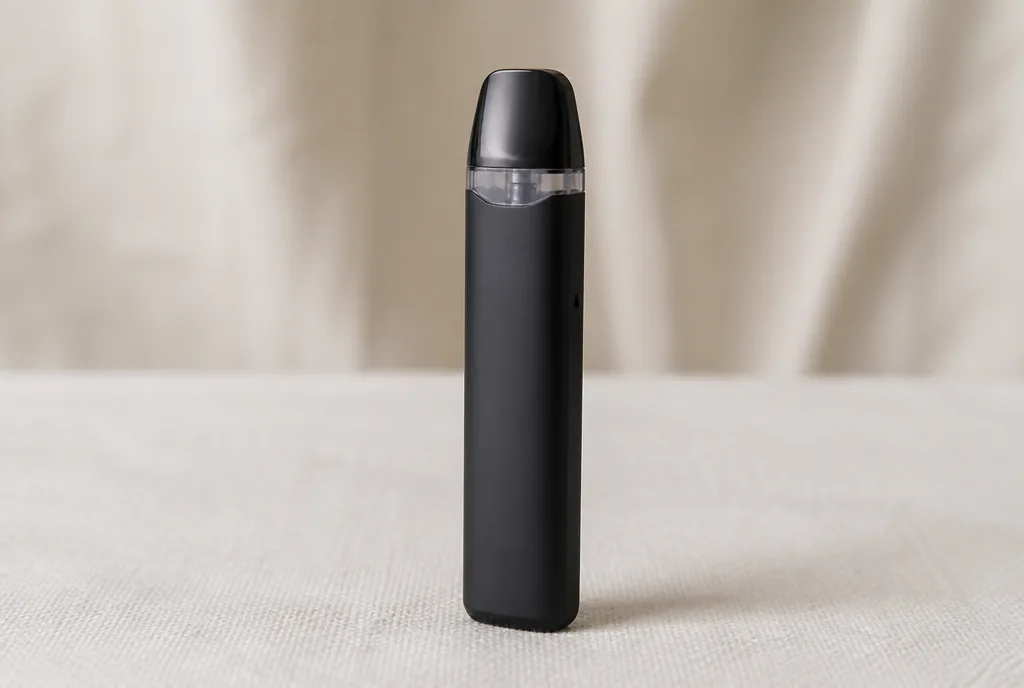
It is a regulated dual battery module. Two 18650 cells sit behind a magnetic side panel, they are not supplied in the box, and UK retailers list the maximum output at 200 watts with coil recognition starting from 0.1 ohm.
Regulated is the operative word. It means an electronic circuit sits between the cells and the coil, measures what is attached and holds the wattage you asked for regardless of how full or how flat the cells happen to be.
The chassis is compact and heavy for its size, takes atomisers up to 26 mm across on a standard 510 connection, and carries an IP68 rating against water, dust and impact. That rating is what the Aegis name has always sold, rather than raw electrical performance.
Where the power comes from: two cells in series
This is the first thing to understand, and it explains why almost every high output mod carries two cells rather than one. The second cell is not there purely for runtime.
Two cells wired in series add their voltages together. Where a single lithium cell presents roughly three and a half volts to the circuit, a pair presents close to double that figure at the same state of charge.
For any given wattage the user asks for, doubling the input voltage roughly halves the current each cell has to supply. That is the real engineering reason behind the dual battery format, and it sits well ahead of runtime in the list of motivations.
How to read a cell datasheet instead of trusting a headline
A mod’s maximum wattage is a property of the board, not of the cells you happen to own. The cells are the part that decides what the device can genuinely sustain, and they come with published documentation.
Every reputable 18650 cell has a datasheet, and three lines on it matter. The rated capacity in milliamp hours tells you roughly how long a charge lasts. The continuous discharge current tells you what the manufacturer has tested the cell to deliver without leaving its specified operating window. The upper and lower voltage limits tell you where the chemistry is meant to live.
The method is to find the datasheet published by the cell manufacturer rather than the figure printed on a rewrap or quoted in a marketplace listing, since those two numbers frequently disagree. If a cell has no published datasheet you can trace to its maker, you have no basis for judging what it will do inside an Aegis Legend 5, and no amount of chipset protection changes that.
Read the coil’s printed operating range the same way. It is a manufacturer statement about that specific part, not a general rule that transfers to another coil.
The AS 4.0 chipset and the modes that decide for you
The brain of the device is the AS 4.0 chipset. Its job comes down to three gestures repeated on every puff: measure the resistance attached, calculate the voltage needed, then chop the current to hold the setting.
UK retailers list four headline modes alongside a Custom option: Smart, Normal, Eco and temperature control. Smart mode reads the value of the fitted coil and proposes a setting on its own, which is convenient until it is not.
One behaviour surprises people on first use and is worth flagging. The box sometimes switches mode by itself as you raise or lower the wattage, and it refuses to drop below the range the coil manufacturer has declared. Custom mode is the only way to take that decision back.
Screen, light bars and haptics: three channels
The device communicates through three separate channels, which is unusual at this level. Each has a distinct job, and knowing which is which saves a lot of pointless button pressing.
The colour screen carries the ordinary settings information. Light bars frame it and fire on inhale, on power up, on shutdown and on locking. Only the vaping animation can be switched off.
Those bars earn their keep during charging, turning green and filling as the cells take charge. Haptic feedback completes the set, with a buzz on locking and an alert when runtime reaches a critical threshold.
A-Lock and the case that built the range
The A-Lock slider sits on the flank of the chassis. Engaged, it neutralises the fire button, which is what stops a mod firing in a bag or a coat pocket.
The return to a physical control is a deliberate reversal. The previous generation used a touch surface that triggered on the slightest contact, a flaw the mechanical latch fixes outright.
Materially, the assembly combines nylon PA 66, glass fibre and silicone, which is where the IP68 figure comes from. A naming oddity often puzzles buyers: the range jumped from Legend 3 to Legend 5 with no fourth model, because the number four is traditionally avoided in China, where its pronunciation is close to the word for death.
The Aegis Legend 5 kit and the 200W headline gap
The Aegis Legend 5 is sold both as a bare mod and as a kit with a sub ohm tank. Tanks sold in the United Kingdom are capped at 2 ml of capacity, so the UK version of the kit is a slimmer proposition than the same box carries elsewhere, and top filling matters more than it would on a larger reservoir.
The supplied mesh coils have printed operating ranges that stop well short of 200 watts. In practice the kit as boxed lives at a fraction of the number on the packaging, which is not a design fault.
The ceiling exists so the board can accommodate very low resistance rebuildable builds, not so it can be used daily. The coil you fit remains the real control surface, as our guide to Geekvape coil series sets out in detail.
Why it offers to stop charging at 80 percent
A discreet setting stops charging at eighty percent of capacity. The option looks pointless until you know what happens chemically inside a lithium cell near the top of its charge.
The final percentage points are reached at high cell voltage, and it is that sustained high voltage that accelerates ageing. A cell routinely taken to a full charge and left there loses usable capacity faster than one kept in a middle band.
Accepting slightly less runtime per cycle therefore extends the working life of the pair. On a device with user replaceable cells that is a direct saving, and it is rare to see it offered in a menu at all.
Frequently asked questions
Should both cells be bought at the same time?
Yes, and they should be the same model. Cells of different ages or capacities do not discharge at the same rate, which makes the weaker of the two work beyond its share.
Does IP68 mean the mod can be submerged?
The rating corresponds to dust resistance and a standardised immersion test carried out under laboratory conditions. In everyday use it protects mainly against splashes and ambient damp.
Can the puff animation be turned off?
No. It is part of the interface and no setting removes it. Only the side light bars can be disabled, and only for vaping.
What does an atomiser error message mean?
It means the value read falls outside the accepted range, or the contact is poor. Cleaning the 510 plate and rescrewing the atomiser without forcing resolves the most common case.
Can an atomiser wider than 26 mm be fitted?
Mechanically yes, but the base will overhang the plate. The overhang looks untidy and weakens the seating, without affecting the electrical behaviour.
Reading a mod before asking for its maximum output
The number on the box describes what the circuit tolerates, not what the kit offers. On an Aegis Legend 5, the coil you have fitted, the documented capability of the cells you own and the range printed by the coil maker together define a working zone far narrower than the 200 watt headline.
That is true of every regulated device. The spec sheet gives you a frame, and the real answer is read off the coil that is currently screwed in. Set against the rest of the range covered in our hardware section, the Legend 5 is notable less for its output than for how much of its behaviour it explains on screen, and the same logic applies to the mods reviewed in our piece on Lost Vape Centaurus.
Editorial content for adult readers only. Vaping products usually contain nicotine, a substance that causes addiction. Not for sale to under-18s in the United Kingdom. This article is not a buying recommendation.